1993 Battle of Mogadishu
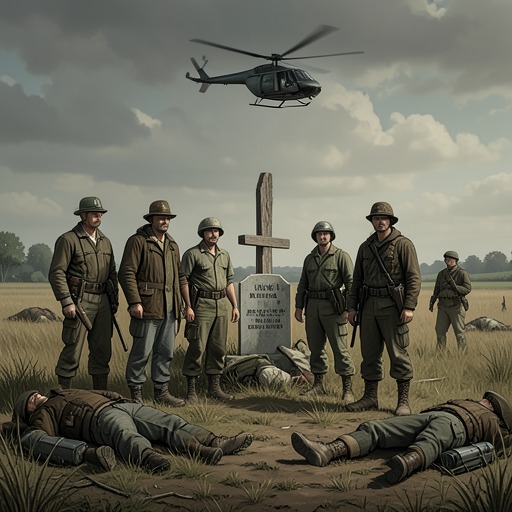
Black Hawk DownThe 1993 Battle of Mogadishu began as a daylight raid to capture two senior lieutenants of Mohamed Farrah Aidid; the downing of a helicopter turned that limited operation into a fight to reach trapped crews and wounded soldiers. The collision between a tightly choreographed assault plan and a rapidly changing battle would shape the mission’s course, while placing civilians, armed fighters, and U.S. troops in the same streets.
Background and the Raid Plan
On the afternoon of October 3, 1993, U.S. Rangers were supporting a commando assault on a gathering of Habr Gidir clan leaders in Mogadishu, Somalia. The clan, led by Mohamed Farrah Aidid, had challenged the United States. The immediate objective was to capture two of Aidid’s top lieutenants inside a target house. Commandos were to storm the building; four helicopter loads of Rangers, including Chalk Four, would descend at the four corners of the block and seal it off so no one could enter or leave. The larger assault force comprised about 75 Rangers and 40 Commando troops in 17 helicopters. A 12-vehicle convoy stood by at the airport to drive three miles to the target, collect the prisoners and assault teams, and return to base. The plan depended on speed and coordinated movement: the raid force would secure the block while the vehicles carried those seized back across the city.
The plan changed when Cliff Wolcott’s helicopter, Super 61, was hit and fell into a narrow alley. Officers at the Joint Operations Center watched the crash in color on surveillance cameras: the aircraft shuddered, smoke appeared near its tail rotor, and it began turning before striking a stone building and smashing against a wall. The immediate danger to the six men aboard was only one part of the crisis. The convoy’s original assignment had been to carry 24 Somali prisoners back to the airport; after the crash, it was redirected to find and rescue Wolcott and his crew while still guarding the prisoners. The raid had become a rescue mission in streets the convoy struggled to navigate, under increasingly intense fire. To the officers watching, the crash also damaged the larger, ten-month U.S. mission in Somalia, which had been presented as part of a commitment to a New World Order and United Nations nation-building hopes.
Rules of Engagement and Civilian Presence
The battle exposed how difficult it was to distinguish combatants from civilians in Mogadishu’s crowded streets. Rangers had been given strict rules of engagement: they were to fire only at someone pointing a weapon at them. Yet armed people were mixed among women and children, while residents gathered to watch disturbances, and earlier Ranger missions had stirred widespread hatred. The rule was clear; the scene confronting the soldiers was not. As crowds approached and gunfire intensified, the intended distinction became harder to apply without putting civilians at risk.
That conflict took a specific form as a convoy crossed an alley. A woman in a flowing purple robe ran past a truck carrying a baby, while the driver fired at whatever moved. Specialist Eric Spalding shouted for him not to shoot because she had a child. The woman turned, still holding the baby on one arm, and raised a pistol with her free hand. Spalding shot her, then fired four more rounds before she fell. The convoy was moving too fast for him to see whether the infant had been hit; he feared that it probably had. The moment joined an apparent threat and a child in the same target area, leaving no certainty about the cost of the split-second decision.
As the fighting continued, the restraints on fire collapsed further. On the convoy’s return toward the airport, Dale Sizemore saw boys aged seven or eight, some armed and some not, and shot them; he also fired into crowds of women moving alongside men with rifles. Numb, angry, and intent on bringing his friends back safely, he no longer cared whether he himself was shot. His actions mark a stark change from the initial rule to fire only at someone pointing a weapon: amid mounting danger and the pull of unit loyalty, civilians and armed opponents became increasingly difficult to separate in practice, even when the difference remained consequential.
For residents, the same streets were not a military map but a place where neighbors and relatives might be caught in the fighting. Abdikarim encountered dead men, women, and children on the road; he also saw an American soldier wounded in the leg and trying to hide. When a woman ran in front of him, the soldier fired in their direction and she was hit, though she managed to get off the street. A Little Bird helicopter then swept down an alley firing, sending bullets along the wall beside Abdikarim. After it passed, armed men ran toward the corner to shoot at the American. Abdikarim fled to a friend’s house, where he and others stayed on the floor through a night of continued shooting. The episode presents the battle not as a clean division between opposing forces, but as violence moving through civilian space, where the armed, the endangered, and the merely present could meet within seconds.
Isolation, Command, and the Cost of Rescue
The crash transformed the rescue force’s problem from a change of destination into a breakdown of control on the ground. Rangers and commandos moving from the target building toward Super 61’s crash site split haphazardly into several groups, each pinned down nearby, with no single officer in charge of them all. The two forces answered to separate chains of command. Meanwhile, the convoy meant to reach the crash site became lost in the alleys and, battered by fire, was close to turning back. Helicopter gunships overhead could not safely fire on Somali gunmen with American troops scattered below, and after two Black Hawk helicopters had been shot down, no aircraft could land to evacuate the growing number of wounded. The men were near one another in the city but divided by streets, gunfire, and incompatible command structures.
The danger made even movement between defended positions a consequential command decision. When Mike Steele told Sergeant First Class Sean Watson to prepare to move out, Watson bluntly challenged the order. Five wounded men were with the group, two of them requiring carriers, and Earl Fillmore’s body also had to be moved. Four men would be needed for each litter, leaving them exposed together as targets; Watson judged that the well-defended courtyard would take substantial force to overrun. His refusal was not simply insubordination: it set the prospective cost of leaving cover against the need to regroup and continue the rescue, at a moment when the wounded and dead could not be treated as cargo easily separated from the men still fighting.
Fear and unit obligation also pulled individual Rangers in opposite directions. Dale Sizemore, barred from the raid earlier because of a cast on his arm, was eager to join the fight; Steve Anderson, his friend, felt dread sharpened by earlier shrapnel wounds and the confusion on the radio. Brad Thomas, who had ridden back with Pilla’s blood on him, told Struecker he could not go back out. Struecker spoke to him quietly, acknowledged that he too was afraid, and urged him to act despite that fear because it was their job. Thomas walked away, then climbed aboard as the vehicles prepared to leave. The episode makes courage neither effortless nor uniform: a Ranger could want to refuse, and still return to the convoy under the pressure of comradeship, duty, and the expectations of the unit.
Aftermath and Renewed Readiness
At the hangar, the commandos were already cleaning their weapons, checking their gear, and replenishing ammunition; they were prepared to return to the fight. Mike Steele, back at the hangar, finally received an accurate casualty list. As he arrived, Sergeant First Class Glenn Harris saluted him and said, “Rangers lead the way, sir.” The exchange places renewed readiness beside the accounting of losses: even as the battle’s casualties came into focus, the men were preparing to go back out.
The Battle Seen from Above and Within
The battle’s command picture and its street-level reality diverged sharply. At the Joint Operations Center, officers watched surveillance images of crowds building barricades and lighting tires to summon help, while people armed with weapons streamed toward the fighting from across Mogadishu. On the ground, Eversmann’s men were firing in every direction except south toward the target building; people moved through alleys and approached the Rangers as gunfire intensified. The Rangers’ prescribed rule—fire only at someone pointing a weapon—met a crowd in which armed people stood among women and children. The screens could show the gathering danger, but the images did not give the soldiers on the street a dependable way to distinguish threats from civilians.
For Aden, sheltering in a house on Freedom Road, the arrival of a Little Bird helicopter brought the battle almost against the walls. Its blades passed inches from the neighboring buildings as dust swirled and gunfire grew louder. One airman aimed up the street while another ran toward the crashed Black Hawk; bullets struck the old car behind which Aden was hiding. At the Joint Operations Center, the same crisis appeared as Super 61’s tail-rotor smoke, slow turn, and violent impact in a narrow alley. Seen from the street or from the surveillance cameras, the crash marked the instant the raid’s controlled movements gave way to a battle spreading through inhabited streets.
The Return Through the City
As the battered convoy neared the airport gate, the gunfire abruptly stopped. Only blocks earlier, the vehicles had been hammering the alleys in both directions; now open-air markets were full of people strolling and talking as if nothing had happened. The crowds parted for the crippled Humvees and the dead, wounded, and horror-stricken soldiers, then turned toward the column, grinning and applauding as it covered the last hundred yards. The sudden passage from a city under fire to ordinary market life, and the applause greeting the returning column, left the battle’s end suspended between relief and an unsettling spectacle.
Preparation for a Daylight Assault
Thirteen minutes before the operation, three miles from the target, Eversmann rode from the Rangers’ beach base wedged between two helicopter crew chiefs, his long legs folded awkwardly around him. His Chalk Four—twelve men in tan desert camouflage—was arrayed on either side of the Black Hawk. The number weighed on him: he had worried about the responsibility of leading twelve men, prayed silently during Mass that morning, and now prayed again as the helicopter lifted. His brief inward ritual sat beside the practical readiness of the assault, as the force waited for the launch code, Irene.
The men had prepared for speed by stripping away anything they thought might slow a daylight raid. They checked their weapons, mentally rehearsed their movements, and gripped grenades and ammunition; canteens, bayonets, and night optical devices were among the equipment left behind. That deliberate lightness embodied the operation’s original premise: a fast descent, a sealed perimeter, and a quick extraction. Once the helicopter fell and the mission changed into a rescue through hostile streets, the same preparation marked how little the force had been equipped for a prolonged fight.
The Men Kept from the Raid
Dale Sizemore’s absence from the opening assault had been involuntary: days earlier, a Commando colonel had thrown him down while they wrestled, injuring his elbow badly enough to leave him in a cast. The Rangers called the muscular blond from Illinois Adonis, and he had the word Ranger tattooed twice on his left arm. Those details sharpen the contrast between the identity he wore openly and the place the injury forced him to occupy: while his friends went into Mogadishu, he had to remain behind. When the rescue effort began, his eagerness to join it was not abstract enthusiasm but the response of a Ranger physically excluded from the action his unit was now facing.